

Outdoor Porcelain Tiles: The Ultimate Guide to Durable Patio and Garden Solutions
Outdoor porcelain in short
- Outdoor porcelain paving is a 20mm thick tile made for patios, paths and garden areas. It absorbs almost no water, so it does not stain easily and never needs sealing.
- We stock over 30 designs from Spanish makers including STN, Rocersa, Mimas and Baldocer, in stone-look, slate-look and plain finishes.
- Colours range from light grey and dark grey to cream and white.
- Porcelain has to be laid on a full mortar bed with a priming slurry on the back of every tile. Get that step right and the patio will last for years.
Outdoor porcelain has become the most popular paving we sell, and it is easy to see why. It looks sharp, the colour stays even from tile to tile, and day-to-day care comes down to a sweep and a wash. This guide covers what porcelain is, how to choose a tile, how it should be laid and how to look after it, based on what we see at our yard in Rathcoole and hear from the people who lay it.
What is outdoor porcelain?
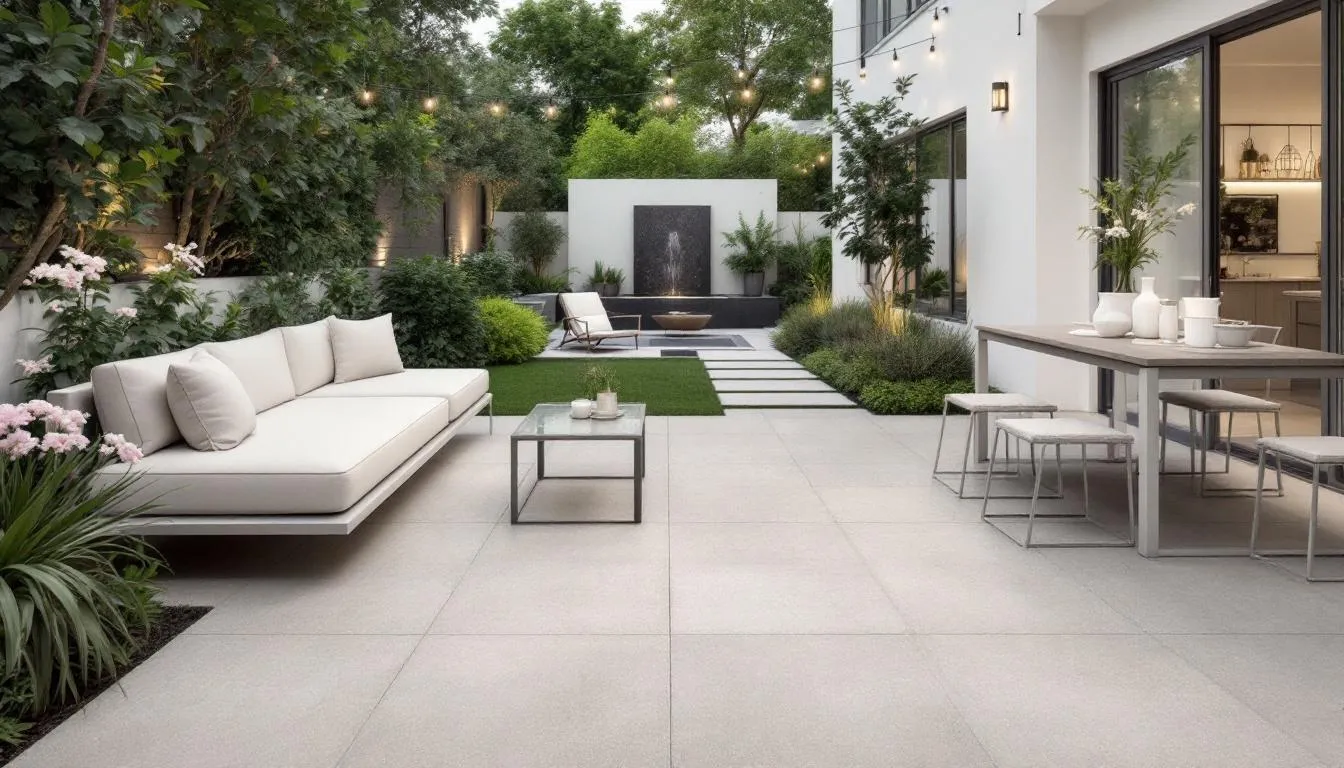
Porcelain is made from fine clay and minerals pressed and fired at very high temperatures. The result is a dense tile that takes in almost no water. Indoor floor tiles are usually 8 to 10mm thick. Outdoor paving is 20mm, which gives it the strength to take foot traffic, garden furniture and Irish frost.
Because the surface is printed and fired, makers can reproduce the look of limestone, slate, granite or concrete very closely. The difference is that every tile in a batch is the same size and thickness, which makes for neat, straight joints.
Why people choose it
- Very little upkeep. Porcelain does not need sealing. Most dirt, grease and red wine wipes straight off.
- Colour that lasts. The colour is fired into the tile, so it does not fade in sun or go patchy over time.
- Grip. Outdoor porcelain has a lightly textured surface for grip in the wet. Keep it clean and it stays that way.
- Clean lines. Even tile sizes and tight joints give a crisp, modern finish that suits newer houses especially well.
The trade-offs are that porcelain is harder to cut than stone, and it is less forgiving if the bed under it is poor. It also does not age the way natural stone does. If you want a weathered, characterful look, read our natural stone paving guide or our porcelain vs natural stone comparison.
Choosing a design
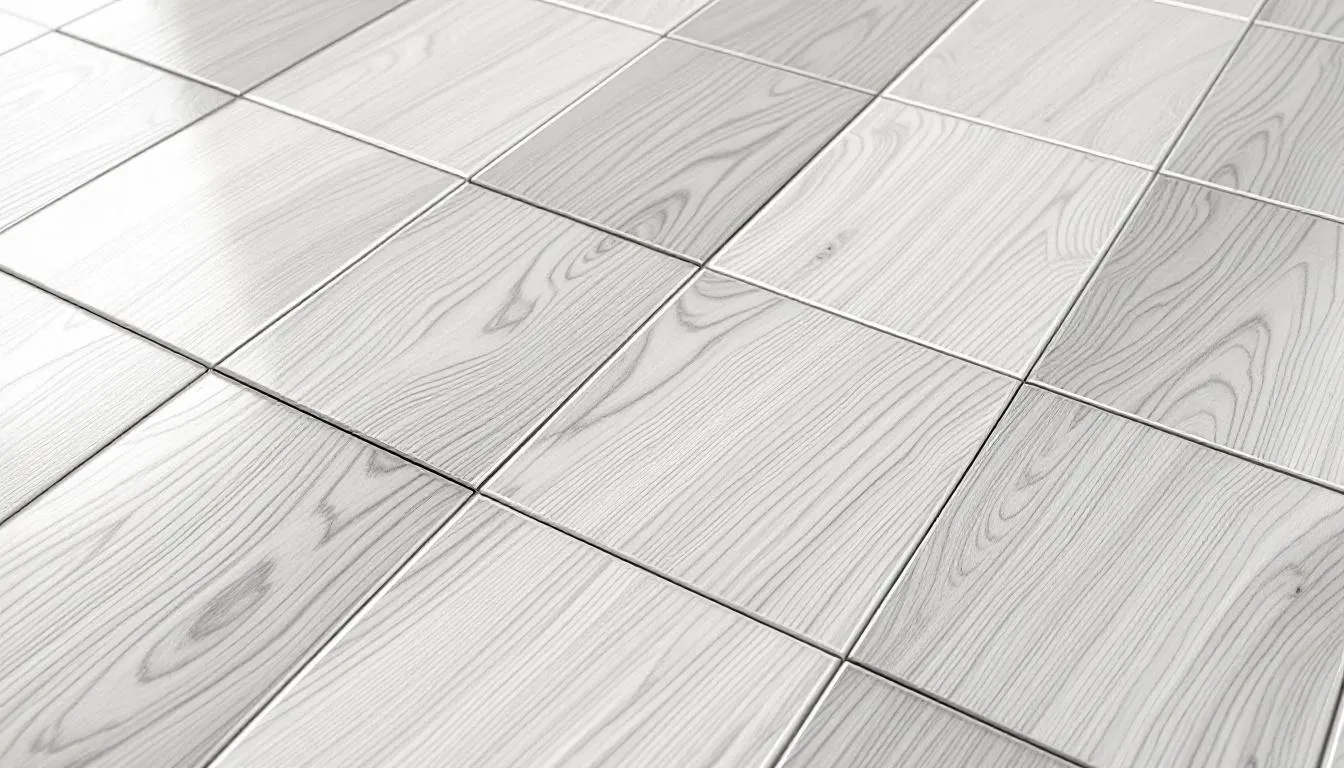
Most customers start with colour, then texture, then size.
- Light grey and silver. Ranges like Silver Granite Porcelain, STN Austral Grey and Rocersa Pietra Grey are the safe choice. They suit almost any house and hide dust well.
- Dark grey and anthracite. Ranges like Mimas Petra Anthracite, Baldocer Cutstone Graphite and Rocersa Omega Graphite make a strong, contemporary statement, especially next to white render or black windows.
- Cream, beige and ivory. Ranges like Rocersa Burlington Cream, STN Sakhir Ivory and STN Miller Beige are warmer and softer, and work well with sandstone-coloured brick or a garden with plenty of planting.
- Slate and stone looks. The Mimas Slatestone and Brazstone ranges have more movement and texture if a very plain tile feels too clinical.
Size matters too. Large tiles such as the STN Sumum range at 1200x600mm mean fewer joints and a calmer, more spacious look, and they are best in bigger areas. Smaller formats are easier to handle, cut and fit around curves and drains. If you cannot decide, call in and see the tiles laid out at our yard. Colours always look different outdoors than on a screen.
How porcelain should be laid
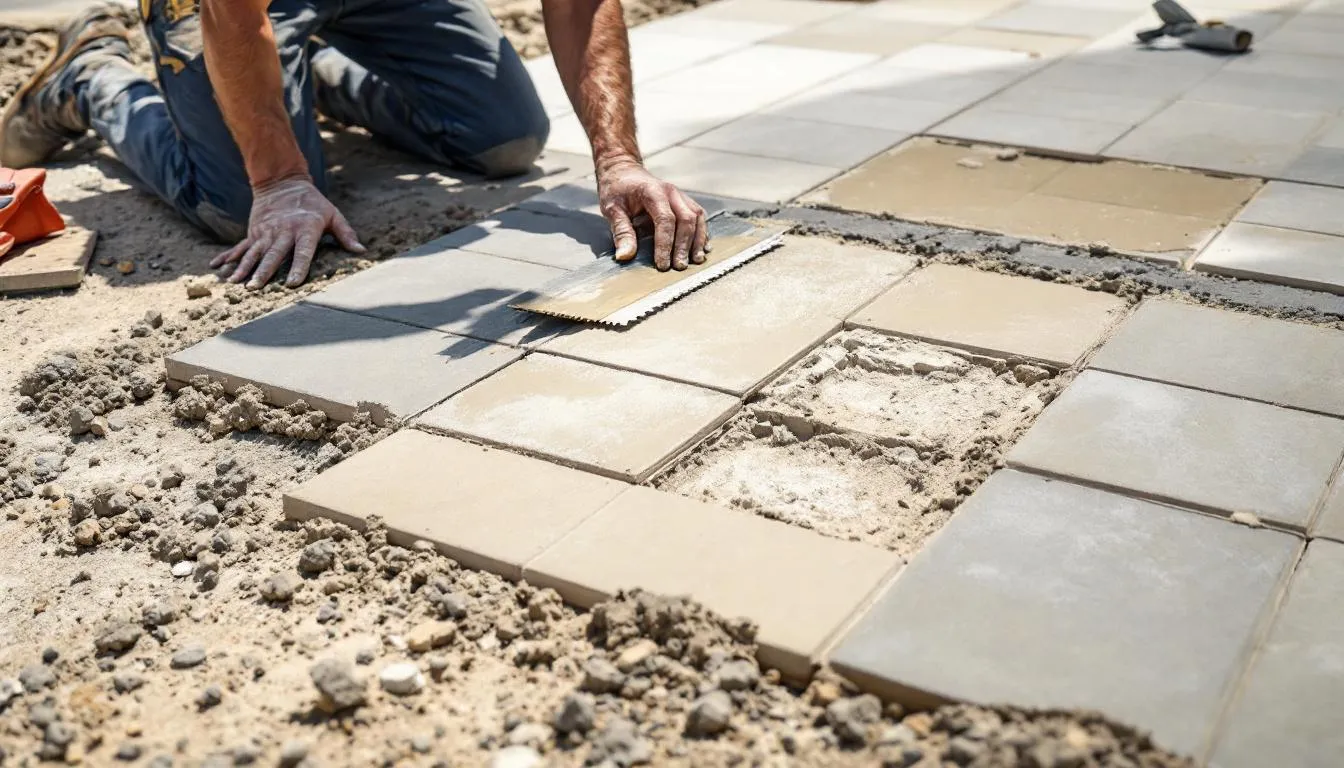
Porcelain is very durable once it is down, but it depends on a good bed. Nearly every failed porcelain patio we hear about comes from tiles laid on dabs of mortar or without a primer.
- A solid sub-base. Excavate to firm ground and compact a granular sub-base in layers. Any soft spot will show through as a rocking tile.
- A fall for drainage. Build in a gentle fall away from the house so rain runs off instead of sitting on the surface.
- A full mortar bed. Every tile needs full contact with the bed. Our sand and aggregates and cement cover this.
- A priming slurry on every tile. Porcelain is so dense that ordinary mortar will not bond to it. Brush a priming slurry onto the back of every tile just before laying. A flexible tile adhesive from our adhesives range, such as Ardex X7 G Plus or Larsen Fast Set Flex, mixed to a slurry, is commonly used for this.
- The right jointing. Use a jointing compound suited to porcelain and the joint width you are working with. Leave a small, even gap between tiles.
- Clean edges. Finish the edges with kerbs and edging, or with steps and copings, so the outer tiles cannot move.
Cutting porcelain needs a proper diamond blade made for porcelain. A standard masonry blade will chip the edges.
Looking after porcelain
- Sweep regularly and wash down with water and a mild detergent as needed.
- For a deeper clean, a power washer on a sensible setting works well. Keep it off the joints so you do not wash out the jointing.
- For green build-up in shaded spots, use a patio cleaner suitable for porcelain.
- No sealing is needed. A sealer can actually leave a film on porcelain.
Frequently asked questions
Will outdoor porcelain crack in frost?
Porcelain absorbs almost no water, so frost does not get into the tile itself. Cracks nearly always come from a poor bed underneath, such as voids under a tile or no primer, not from the weather.
Is porcelain slippery when wet?
Outdoor porcelain has a textured surface designed to give grip in the wet. Like any patio, it can get slippy if algae builds up in a shaded area, so give it a clean now and again.
How thick does outdoor porcelain need to be?
Use 20mm for outdoor paving. Thinner tiles are made for indoor floors and walls and are not suitable for laying on a patio bed.
Does porcelain need sealing?
No. That is one of its biggest advantages over natural stone. Keep it clean and it will look the same for years.
Can porcelain be laid over an existing concrete patio?
Often, yes, if the concrete is sound, not cracked or moving, and already falls away from the house. Check door thresholds and drains for the extra height. Send us photos if you are unsure.
How much should I order?
Work out the area in square metres and add around 10% for cuts. Our team can check your quantities and help you choose jointing and primer to match.
Want to see the tiles in person? Call in to our yard in Rathcoole, Co. Dublin, or contact our team. We deliver anywhere in Ireland.